
 Yardzen 2026 Trend Report
Designing Our Environments
Eight trends shaping how we design outdoor spaces in 2026.
For years, outdoor design has been driven by aesthetics and amenities. Spaces were assembled as a series of elements. In 2026, that framework is evolving. Homeowners are no longer designing yards as a collection of features. They're designing environments — spaces shaped by climate, light, and local context, where planting, materials, and layout work together to create a cohesive atmosphere. The focus has shifted from what a yard contains to the experience of being in it.
Across the country, we’re seeing a move toward “softer” outdoor living: layered planting, curved pathways, and gathering spaces that flow naturally from the home into the landscape. The goal is no longer to assemble a collection of outdoor amenities, but to create spaces that feel immersive, calming, restorative, and connected to place.
This shift is happening against a broader cultural backdrop. Americans are projected to spend a record $522 billion on home renovations this year. But the emphasis is changing. Rather than investing in spectacle, homeowners are prioritizing something quieter: privacy, atmosphere, and wellness.
A renewed appreciation is taking shape for the regional character that makes each corner of the country feel like itself. The best landscape design listens for what makes a place singular, what makes a client unique, and lets those things lead.
At Yardzen, the data confirms it. Year over year, the average cost of an outdoor living project has increased by 11% as clients invest more in their exterior spaces. But spending is moving away from high-impact statement features and toward native planting, natural materials, and layered experiences. A recent Houzz study found that 54% of renovating homeowners upgraded their outdoor spaces last year, with many choosing garden beds and planting over water and fire features.
The result is a new kind of luxury: cohesion, comfort, calm, and wellbeing. No single element dominates. The overall experience does.
Each of the following trends reflects this shift — toward designing outdoor spaces as purposeful, responsive environments, grounded in place, shaped by climate, and designed for daily life.
$522B projected U.S. home renovation spend
Harvard Joint Center for Housing Studies (NYT, March 5, 2026)
+11% in average outdoor project cost year over year
Explore the trends ↓
Planting Takes the Lead
Planting is reclaiming its role as the foundation of outdoor design. Of all the moves available to a designer, planting delivers the most for the least. Native and climate-adapted plants conserve water, reduce heat islands, support pollinators, and create restorative environments with measurable wellness benefits. They're also, by a wide margin, the most affordable feature in any landscape budget. Hardscape and planting should be understood as dance partners, each making the other better, together creating something bigger than the sum of the parts.
The best plant palettes today take their cues from local wildlands, including meadows, chaparral, woodland edges, and the high desert of each region, then do something new with those "ingredients." What "abundant" looks like will differ: layered and lush in the Pacific Northwest, open and textural in the arid Southwest. Regional character is the starting point, not a constraint. In fire-prone areas, thoughtful design incorporates fuel breaks, such as pathways, gravel, and hardscape interruptions, so that beauty and fire safety work together rather than against each other.
+23% year-over-year increase in requests for native planting, pollinator gardens & climate-adapted species at Yardzen
“Plants are no longer a second step. They're the primary design material.”— Kevin Lenhart
Beyond aesthetics, plant-forward landscapes support pollinators, create wildlife corridors, and strengthen local ecosystems, while conserving water, mitigating heat, and fortifying the regional landscape identity that makes each part of the country feel distinctly itself.
Soft Yards
Form remains, but it's expressed through more natural, adaptive geometry. Rigid layouts are giving way to softer, organic forms. Think curved pathways, informal planting edges, layered garden beds, and outdoor rooms that feel integrated into the surrounding landscape rather than imposed upon it.
“You won't find straight lines, blocky rectangles, or equal spacing in nature.”— Kevin Lenhart
Materials like natural stone, Belgard Cobble pavers™, and gravel don't just provide structure; they carry the color, texture, and character of the surrounding landscape into the designed space. Hardscape still plays a critical role, guiding movement, defining space, anchoring planting, but increasingly as a supporting element rather than the dominant voice.
This shift reflects a broader move toward softer outdoor living: environments that feel layered, responsive, and connected to place. And within that, there's room, and even encouragement, for individual character. Every client is different. Every yard should be too. The best approach is a "yes, and…" stance: respect what's true to the region, then make it yours.
Microclimate & Restorative Atmosphere
The most livable outdoor spaces today are designed as climate systems. Homeowners are thinking in terms of microclimates: how shade, airflow, materials, and planting interact to shape comfort throughout the day. Tree canopy and shade structures can significantly reduce surface and air temperatures; trees positioned to shade a home can also reduce energy consumption. Requests for shade and cooling features at Yardzen are up 13% year over year.
Trees are the single most impactful element you can add to a landscape, full stop. When someone falls in love with a yard, it's almost always because of a heritage tree. Layered planting also contributes by retaining soil moisture, capturing stormwater onsite, reducing erosion, recharging groundwater, and cutting pollution in downstream ecosystems.
That layered planting does double duty, as it's also the foundation of how people are reimagining privacy. Privacy is no longer just functional; it's emotional. Drawing on the concept of prospect and refuge, homeowners are designing spaces that feel both open and protected. This planting, elegant fencing, hedging, and enclosed garden rooms create a sense of enclosure without isolation. Spaces designed to buffer noise, soften views, and create calm are in increasing demand.
+13% shade & cooling features +10% privacy-driven elements (following last year's +22%)
“When someone falls in love with a yard, it's almost always because of a heritage tree.”— Kevin Lenhart
Beyond the Lawn
The traditional lawn is being replaced by more dynamic, resilient ground planes. Clover blends, native grasses, gravel gardens, and groundcovers are taking their place, each bringing texture, permeability, and regional character without the water and pesticide load. At Yardzen, traditional lawn square footage has dropped 25% year over year in favor of more flexible, layered systems.
Naturalistic yards aren't the only game in town when it comes to evoking nature in a design. There are several natural and aesthetic ways to break up large, ornamental lawns. Gravel, in particular, offers more range than it's often given credit for, from cottage garden paths to desert courtyards. Choosing a high-quality stone color drawn from the regional palette can root a design in its local landscape more effectively than almost any other material decision. It gives a space a sense of belonging to its place, its ecology, its climate.
Homeowners are also choosing pavers, block walls, and other hardscape materials in colors that evoke a region's native landscape, helping to ground the space with a sense of belonging and an aura of appropriateness.
This kind of thinking adds an extra layer of meaning to material selection, yielding a richer design by moving beyond mimicking nature to interpreting it. That's interesting.
−25% traditional lawn square footage at Yardzen year over year
Daily Outdoor Living
Outdoor spaces are becoming extensions of everyday life rather than settings for occasional gatherings. We're seeing increased demand for spaces tied to specific moments in the day: morning coffee areas, shaded reading corners, barefoot paths between planting beds, and flexible zones for movement and rest.
Saunas, cold plunges, and outdoor showers reflect a growing desire to create restorative spaces for everyday life at home.
Importantly, these wellness spaces aren't being designed as isolated destinations. They're integrated into the broader landscape through layered planting, natural materials, gravel pathways, soft lighting, and climate-responsive design that makes the entire yard feel restorative.
Edible planting reinforces this return to slower, daily rhythms. Herbs, vegetables, and fruiting plants are designed alongside outdoor kitchens and gathering spaces, creating a direct connection between garden and table and strengthening a seasonal rhythm of planting, harvesting, and use.
These aren't features. They are habits made spatial.
The Party Patio
One of the defining outdoor living trends of 2026 is the rise of the "party patio": a functional outdoor gathering space positioned directly next to the home to facilitate indoor-outdoor living, often featuring pass-through windows, French doors, or large sliding doors that create an easy flow between inside and out.
Whether it's a gravel courtyard, concrete patio, paver terrace, or a deck, these spaces prioritize connection and flexibility over size. Designed for spontaneous gatherings and everyday use, they make outdoor living feel easy and immediate.
At Yardzen, we're seeing homeowners prioritize practical entertaining spaces with grills, modular outdoor kitchens like Belgard Artforms™, flexible dining areas, layered planting, and lighting that supports both casual hosting and daily life.
It functions as a true flex space: outdoor dining room, work-from-home spot, kids' hangout zone, or easy entertaining area depending on the moment.
The best party patios aren't oversized or overdesigned. They're highly usable spaces that support the rhythms of everyday life.
A Natural Palette
Color is drawn from the surrounding landscape, not imposed on it. Green is emerging as the defining color story of 2026. Designers layer tones from soft sage to deep forest across planting, materials, and furnishings to create depth and cohesion. Pops of color from flowering perennials, containers, and soft furnishings add moments of delight that echo the way color appears in nature: surprising, seasonal, never dominant.
The result is a palette that feels calming, immersive, and continuous with the natural environment. One that belongs where it's planted.
That said, beauty is not a single thing. It means something different to every person, and that's exactly the point. The goal isn't to chase the color of the year, it's to find your version of beautiful and express it without apology. A yard that looks genuinely like its owner, rather than like a trend aggregator, does more for the world — it broadens our collective experience, pulls us from our habits, and makes the landscape more interesting for everyone.
A New Starting Point
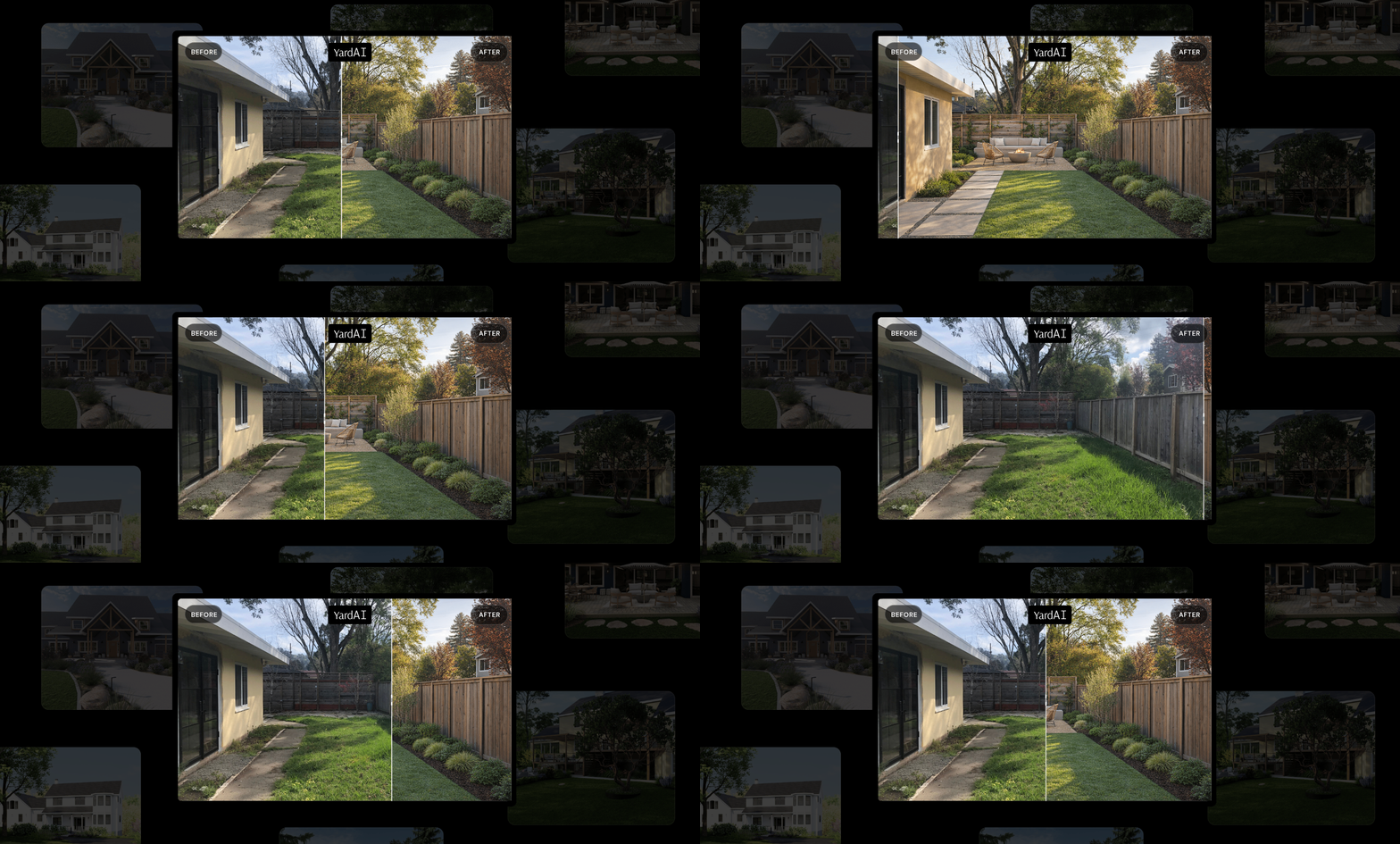
For most homeowners, the challenge isn't budget — it's knowing where to begin. The trends in this report describe where outdoor design is going. The harder question is how to translate them into a specific yard, with its specific climate, soil, light, and constraints.
YardAI by Yardzen was built for that. Trained on tens of thousands of real Yardzen projects, it generates concepts grounded in regional planting and real materials, then shows you what's possible in your specific space — not a render of an idealized yard, but a starting point shaped by where you actually live.
“The best landscape design listens for what makes a place singular. YardAI is how we put that listening at the start of every project.”— Kevin Lenhart
It's not a replacement for design judgment. It's the front door — a way for homeowners to see directionally what their yard could become, then bring that clarity into a real conversation with designers, contractors, and the trades who will build it.
Try YardAI →